 Call Us : 08071630670Call Us : 08071630670

 Send Inquiry
Rotating Paddle Level Sensor For Solids
Price 10000 INR/ Piece
MOQ : 1 , , Piece
Rotating Paddle Level Sensor For Solids Specification
- Mounting Type
- Flange or Threaded
- Operating Temperature
- -20C to +60C
- Wireless
- No
- Cable Length
- Standard 1.5 meters (Extendable)
- Measurement Range
- Customizable as Required by Silo/Hopper Depth
- Application
- Continuous/Point Level Measurement of Non-Liquids
- Interface
- Terminal Block Connection
- Response Time
- Less than 1 second
- Sensor Type
- Rotary Paddle Switch
- Signal Type
- Relay Contact Output
- Sensitivity
- Adjustable via Spring Mechanism
- IP Rating
- IP65
- Features
- Dustproof, Maintenance Free, Corrosion Resistant
- Power Consumption
- Max 3 W
- Product Type
- Rotating Paddle Level Sensor For Solids
- Material
- Stainless Steel
- Input
- 24V DC, 110/230V AC (specify model)
- Output
- SPDT Relay Output (1A @ 250 VAC)
- Function
- Point Level Detection of Solids in Bins, Silos, and Hoppers
- Usage
- Bulk Solids Level Monitoring (Powders, Granules, Grains, Cement, Sand, etc.)
- Accuracy
- 5 mm
- Resolution
- High Sensitivity Paddle Mechanism
- Voltage
- 24V DC / 110-230V AC
- Weight
- Approx. 1.5 - 2.5 kg (Depending on Model)
- Mechanical Life
- Over 1 Million Operations
- Process Pressure
- Up to 1 bar
- Ingress Protection
- Sealed Enclosure
- Gear Motor Speed
- 1 RPM 2.5 RPM
- Shaft Protection
- PTFE Coated (optional)
- Housing Material
- Powder Coated Aluminium/ Stainless Steel
- Alarm Function
- High/Low Level Alarm Capability
- Explosion Proof
- Optional EX-D/ATEX Models
- Shaft Length
- Customizable up to 2 meters
- Paddle Type
- Single, Double, or Cross Paddle Configurations
Rotating Paddle Level Sensor For Solids Trade Information
- Minimum Order Quantity
- 1 , , Piece
- Supply Ability
- 500 Pieces Per Week
- Delivery Time
- 2 Week
About Rotating Paddle Level Sensor For Solids
We are able to supply a wide stock ofRotating Paddle Level Sensor For Solids. These are useful to detect solid application media. Apart from this, provided solids are suitable for level detection. Rotating Paddle Level Sensor For Solids can also be adapted to extreme process conditions. They are highly effective for level detection for liquid. These are basically continuously rotating by a motor to give a great speed as well as performance.
Product details
|
Brand |
Sapcon |
|
Model Name/Number |
Orbit-lite |
|
Pole And Throw Specification |
SPDT |
|
Usage/Application |
Industrial |
|
Switch Type |
Relay |
|
Current Rating |
6Amp potential-free at 230 V AC |
|
Mounting Options |
Both Side and Top |
- Application Temperature Range: up to 200 C
- Outputs: : 1NO, 1NC 6Amp potential-free at 230 V AC
- Switching: Single-point switching
- Suitable for Bulk Density 0.5g/cm3
- Foldable paddle mechanism for easy installation
- Probe Length Range: 100mm - 1000mm
- Maximum Horizontal Load: 125 Nm
- Wetted Parts: Aluminum, SS-316, FKM / NBR
- Power Supply: 230 V AC
Versatile Paddle Configurations
Choose between single, double, or cross paddle designs to maximize sensitivity and adaptability to various solid materials. These configurations help ensure accurate level detection, whether dealing with powders, grains, or granular products, optimizing process safety and efficiency for different industrial applications.
Customizable Shaft Length and Protection
The sensor boasts a shaft length that can be tailored up to 2 meters for your specific vessel size. An optional PTFE coating further protects the shaft from corrosion and adherence of sticky substances, leading to longer service life and reduced maintenance requirements in challenging environments.
Robust Construction and Safe Operation
Built with powder-coated aluminium or stainless steel housing, the rotating paddle level sensor is designed for robustness. Its sealed enclosure provides excellent ingress protection, while optional explosion-proof (EX-D/ATEX) models ensure safe operation in hazardous areas, making it suitable for diverse industrial settings.
FAQs of Rotating Paddle Level Sensor For Solids:
Q: How does the rotating paddle level sensor operate in solid material applications?
A: The paddle rotates continuously inside the silo or hopper. When it encounters solid material, the resistance triggers the sensor to send a high or low level alarm, depending on the set threshold. This helps prevent overfilling or emptying, providing precise level detection.Q: What paddle configuration should I choose for my application?
A: Selection depends on the materials propertiessingle paddles are ideal for standard powders, double paddles enhance coverage for light bulk materials, and cross paddles are preferred for granular solids requiring greater sensitivity and area coverage.Q: When should I consider opting for the explosion-proof (EX-D/ATEX) model?
A: Choose the explosion-proof variant if your operation involves flammable or combustible dusts and is in a classified hazardous area. The EX-D/ATEX model is compliant with stringent safety standards to reduce the risk of ignition.Q: Where can this level sensor be installed?
A: It is suited for installation in silos, bins, and hoppers across industries such as cement, food processing, agriculture, and chemicals. The customizable shaft length and mounting options adapt to different vessel sizes and shapes.Q: How does the PTFE-coated shaft benefit my operation?
A: The optional PTFE coating enhances the shafts resistance to corrosion and prevents sticking from sticky or aggressive materials, reducing maintenance frequency and extending operational life in demanding environments.Q: What is the process for customizing shaft length and material options?
A: You simply specify your required shaft length (up to 2 meters) and choose your preferred materialpowder-coated aluminium or stainless steelwhen placing an order. Manufacturers and suppliers in India will tailor the sensor to your specifications.Q: What advantages does this sensor offer in terms of usage and reliability?
A: Users benefit from dependable high/low level alarms, robust mechanical life exceeding one million operations, and a sealed enclosure for protection against dust and moisture. These features ensure operational reliability and reduce downtime in industrial solid-level monitoring.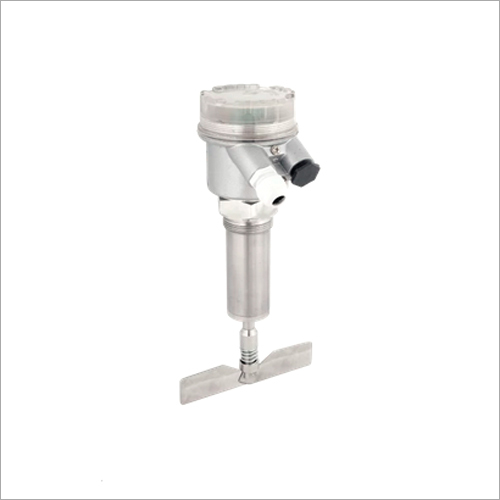
Tell us about your requirement

Price:
Quantity
Select Unit
- 50
- 100
- 200
- 250
- 500
- 1000+
Additional detail
Mobile number
Email

More Products in Level Sensors Category
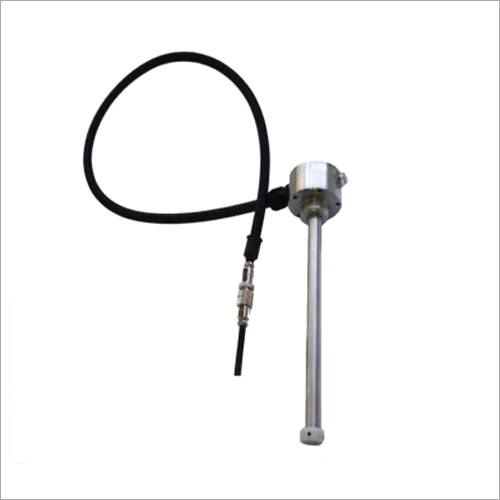
Remote Tracking Fuel Level Sensor
Price 10000 INR / Piece
Minimum Order Quantity : 1 Piece
Material : Stainless Steel
Voltage : 220 Volt (v)
Usage : Industrial
Product Type : Level Sensor
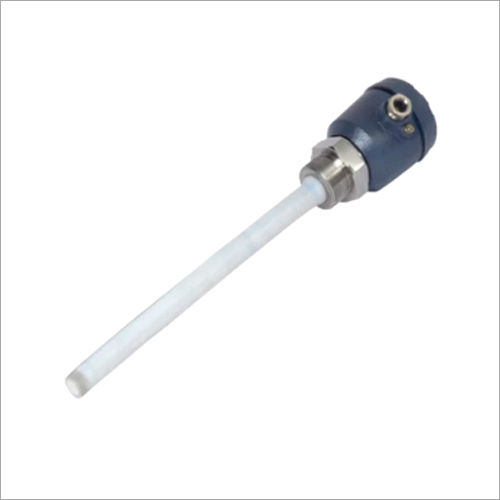
Capacitive Level Sensor For Bulky Solids
Price 10000 INR / Piece
Minimum Order Quantity : 1 Piece
Material : Stainless Steel
Voltage : 220 Volt (v)
Usage : Industrial
Product Type : Level Sensor
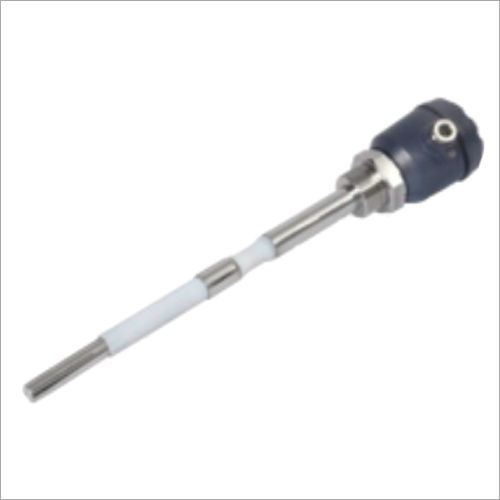
RF Admittance Level Sensor For Sticky Media
Price 10000 INR / Piece
Minimum Order Quantity : 1 , , Piece
Material : Stainless Steel

Tuning Fork Level Sensor
Price 10000 INR / Piece
Minimum Order Quantity : 1 , , Piece
Material : Stainless Steel

Address
SAPCON INSTRUMENTS PVT. LTD.
GST : 23AACCS4126N1ZC
GST : 23AACCS4126N1ZC
- B No - 131, Palsikar Colony,Indore - 452004, Madhya Pradesh, India
- Phone :08071630670
- Send Inquiry
 Send Inquiry
 Send Inquiry
 Send SMS
 |
SAPCON INSTRUMENTS PVT. LTD.
All Rights Reserved.(Terms of Use) Developed and Managed by Infocom Network Private Limited. |
